Saturday, June 9, 2012

Indian Brunch plus Lemon, Ginger & Cumin Scones

After venturing to Syracuse last week to procure curry leaves, mangoes and other delights, I made brunch for some friends this morning with an Indian theme. I've mentioned before that one of my favorite brunch dishes is eggs made with some curry leaves, onions, ginger and a Thai chile. I supplemented that with a richly spiced potato curry in tomato sauce and some fresh pineapple (thanks, Sahara!).

I believe brunch to be  incomplete without baked goods, however, so I wanted to make an appropriate scone. I decided to start with Joanne Chang's fabulous recipe for lemon-ginger scones, as both of these are plausibly Indian flavors. Plus, it's a great recipe into which she squeezes fresh lemon zest, fresh ginger, dried ginger and candied ginger. It's topped with a sweet lemon glaze made with just fresh lemon juice and powdered sugar.

To make them more 'Indian,' I added a few (1/2 tsp or so) cumin seeds to the batter. These were very subtle, though, so I wanted to add more punch. To do that, I added some ground cumin (1/2 tsp) and a bit of ground cayenne (1/4 tsp) to the glaze, mixing the spices with the sugar before adding the lemon juice. The result was a powerfully tasty glaze when eaten on its own, but gave a nice subtle accent to the scones when spread thinly on top. A win, I think. And friends seemed to agree.


Tuesday, June 5, 2012

Mango & Szechuan Pepper Sorbet

I hesitate to admit this broadly, but students who have taken my undergraduate courses know that I always include at least one exam question that features "Larry the Mango Lover," a fictional aficionado of mangoes. Larry often finds himself without access to the mangoes he loves, and the questions (which do tie directly back to course concepts, just for the record) are about how he resolves this situation. In a course about online social support, Larry turns to the Mango Aficionados Networking Group Online (yes, MANGO) for help.  When we discuss common ground in communication, Larry helps his friend pick out the right mango to bring home from the Asian grocery ("Is it yellow?" "Ok, but is the end more pointy or round?"). You get the idea.

More than one student has figured out that Larry is a thinly veiled and somewhat exaggerated version of yours truly. I haven't turned to online support groups for mango lovers, but I certainly do miss good mangos when I'm in Ithaca. And that's why, on a recent trip to an Indian grocery in Syracuse, I didn't blink at the idea of bringing home a box of 20 or so small Ataulfo mangos from Mexico.

Schezuan Peppercorns
I've got plans for these mangos. Of course, I'll eat one every morning with some plain yogurt for breakfast. But they won't all last that long. I'm also planning a mango gazpacho. Maybe some mango salsa (which are both actually pretty similar). And the topic of today's post: mango sorbet.

Not just any mango sorbet, though. I added Szechuan peppercorns just to make it interesting. For those who don't know them, Szechuan peppercorns are a dried berry that is both spicy and (literally) mouth-numbing. Spice goes nicely with mango, so I figured this would be worth trying.

Steeping syrup
To get the peppercorn flavor into the sorbet, I steeped a few tablespoons of them in the simple syrup that would sweeten the sorbet. I brought these to a boil and let steep for about 5 hours. Then I sliced up a few mangos (about 2 pounds worth, or 5 small ones) and put these in the blender with the syrup (1 cup, peppercorns strained out), juice from one lime, a tablespoon of clear rum (to prevent ice crystals) and a bit of sorbet stabilizer (to prevent more ice crystals). This was then frozen in the ice cream maker.
Finished Sorbet

The result is tasty. It's sweet like mango and has a very slight hint of the peppercorns, with a very slight bite. It's interesting and I like it, but I wonder if there's a way to punch up the spice a bit. Maybe a tiny bit of salt, or leaving some cracked peppercorns in the mix next time.


Wednesday, May 30, 2012

Asian-Inspired Sugar Cookies

Completed cookies
I fear, dear readers, that I have let you down. I've become one of those dreaded bloggers that goes for weeks or months without a post, and then promises he'll post more often, only for another months-long silence. I never meant for this to happen. I harbor no illusions about you all having nothing better to do than read my ramblings, but still feel slightly flaky. I've been traveling a ton over the past few months, and haven't had time to do much interesting cooking. My apologies.

But for the moment (several of them, actually), I'm back!  I've got an unprecedented four consecutive weeks at home, and have big plans for lots of food-related experimentation. I want to play with high-end jello shots, make lots of ice creams and sorbets, and do some baking as well.

I've started with baking. I needed some cookies (I somewhat compulsively need a home-baked dessert to bring with my lunch each day), and decided to work with what I had available. Flipping through Dorie Greenspan's fabulous Baking From My Home to Yours, I discovered her sugar cookie recipe, which she described as quite adaptable. I decided to adapt it.

A disk of palm sugar.
My first adaptation was to include some of the palm sugar I brought back from Indonesia. Palm sugar is unrefined, a bit less sweet than cane sugar and has a bit of a sharpness to it that goes along with its sweetness. I also recently learned that it contains potassium and iron. I bought it in these little disks (see photo) that crumble fairly easily, and can be substituted directly for sugar. The sharpness can dominate, though, so I only used it for about 1/3 of the sugar.

I also mixed the zest of a lime in with the butter and sugar, once I had creamed them together a bit. Lime and palm sugar play very nicely together and that got me going on the Asian theme. I decided to add some sweetened coconut and ginger to continue that idea. I used Indian-style ginger paste (1 tsp) I had in the fridge, instead of the vanilla extract called for in the recipe. I then stirred about 1/2 cup of sweetened shredded coconut into the dough when it was all mixed.

Cookies before baking.
The dough can be either rolled out or sliced, and I opted to slice for simplicity. I made 2 "logs" of dough, refrigerated them overnight, and then sliced into approximate rounds and baked for 10 minutes.

The result is tasty. The lime is clearly the dominant flavor, but the palm sugar gives it a bit of sharpness/roughness. They're very buttery, and the ginger provides a subtle, but noticeable bite.

Success!

Here's the recipe:


2 Cups all-purpose flour
1/2 tsp salt
1/2 tsp baking powder

10 TBSP butter (1 stick plus 2 tablespoons)
1 cup sugar
1 large egg, plus 1 egg yolk
1 tsp ginger paste

1/2 cup sweetened coconut


1. Mix dry ingredients together in a bowl:

2. Beat butter (10 TBSP) in a stand mixer for a couple minutes to soften. Then add 2/3 cup white sugar and 1/3 cup (2 disks) unrefined palm sugar. Beat for a couple more minutes until well combined. Then add the egg and yolk; beat for another minute. Add the ginger and beat briefly.

3. Reduce mixer speed to low and slowly add flour. Mix until just combined, then stir in coconut.

4. Form 2 equally sized logs of dough about 2" in diameter. Wrap in plastic and refrigerate.

5. Slice logs into 1/4" slices. Place on a parchment-lined baking sheet 1.5" apart, and bake for 10 mins at 350 F.

Saturday, March 24, 2012

Eating in Yogyakarta

I recently returned from a few days in Yogyakarta, Indonesia. The real purpose of the trip was to see the Borobudur and Prambanan temples, and do some cycling. As usual, however, I'll focus here on my food experiences.

Disclaimer: I'm not an expert on Indonesian cuisine. I'm going to do the best I can here to describe things I ate that were purchased mostly from people who spoke very little or no English, by somebody (me) who doesn't speak Bahasa at all.


First, a few words that I learned that are critical. Perhaps the most common word related to food was "goreng," which means fried. There was a ton of fried food, with chicken ("ayam") being among the most common. On day one I stopped in a little open restaurant for some fried chicken with rice ("nasi"). This is also a good time to mention that one can eat local food extremely cheaply. The chicken and rice cost about $1. 

For dinner that evening, I went to a fancier place that actually had an English menu and proper chairs/tables. There I had a fish curried with pineapple and a local spice blend (lots of turmeric, probably some cloves/nutmeg, and plenty of chilies), also served with rice and a shrimp (?) cracker. These crackers are pretty ubiquitous. With a beer and a shake for dessert, dinner was a whopping $5. Gasp.

The next day I was on a cycling trip and my guides took me to a roadside restaurant just outside of town. Many restaurants just have food sitting in a buffet-like arrangement, and you just take what you want. Here I had more fried chicken, some tiny little fried fish, some cooked vegetables, and tofu cooked in coconut milk, all atop rice. They also had a soup that was a thick broth spiced with lemongrass and cloves, filled with fatty chunks of beef, and with some sort of still-crunchy legumes. All delicious.

That evening, I decided to eat only food that was being cooked in sidewalk warungs, which are tiny little local restaurants that exist entirely on the sidewalk. I also decided to eat only stuff that I could see being cooked, just to be on the safe side. I first saw a woman frying stuff that looked really good. I thought it was going to be fish, but I actually have no idea what it was. She was also making fried cassava chips. Total cost for one piece of fried stuff, and a handful of cassava chips? 20 cents. I also spotted a satay place, where I bought a cluster of tiny satays (maybe 12?) served to me in a banana leaf with some sauce for about $1. Regrettably, I didn't get photos of these.

The next morning I was on another organized trip to see Borobudur Temple and the surrounding villages. My guide there took me to a tiny village street restaurant for breakfast, where a woman just had a board set up on the side of the road and was dishing out breakfast. Here I had rice porridge, spiced coconut, tofu in a spicy curry sauce, and some fried onion pancakes. Fabulous.


For lunch, my guide took me to a little restaurant in town that serves only a special local dish made with jackfruit. They chop up the jackfruit, cook it in coconut milk with some palm sugar (it turns black for reasons I don't totally understand), and then serve it with various proteins, rice and cow skin (that's what the guide said it was) covered in chile paste. Shown here is the tofu option. Chicken heads, eggs, chicken meat, and various other options were available. Cost for this dish was about 60 cents.

That night I went to a slightly upscale warung, in that it existed in a tiny storefront, but the kitchen was right on the sidewalk. This place specialized in nasi goreng (fried rice, if you're paying attention), which was served with various vegetables and quite tasty, alongside some lightly pickled cucumbers. Sorry the photo is slightly fuzzy.


All in all, a fascinating and tasty journey.

Thursday, February 23, 2012

Back to the Kitchen: Mango Vodka Cupcakes with Dulce de Leche Icing

After quite a bit a travel (Toronto, Seattle, Vancouver; mostly for conferences and meetings), I'm happy to report that I'm back in my kitchen for a few days. For lunch with my guinea pig colleagues tomorrow, I decided to try something a bit more off-road than the cookbook recipes of the last few posts.

I was flipping through some cookbooks and found a rum-soaked cake that looked interesting. I'd never done anything like that, and introducing alcohol into lunch seemed a lovely idea. I've never made a layer cake, though, and didn't want this to be my first attempt. Cakes are also sort of impractical for our lunch venue, where we have very little in the way of cutlery. So I looked around online for cupcakes as a starting point.

As I've said before, one of my favorite (former) cupcake blogs is Vanilla Garlic. He had a rum-soaked cupcake with dulce de leche icing that sounded delicious. It called for spiced rum, though, which I didn't have. At first I thought I would use coconut rum instead, but then realized I had some leftover vodka that I had infused with Indian mangoes last summer.

Infusing vodka is a really fun thing to do with fruit. Normally I'd throw whole fruit in, but Indian mangoes are a special case. Rather than waste whole precious mangoes, I took all of the pits from a case or so of alphonso mangoes and a couple banganapalis (with the flesh on them still untouched) as I finished eating the rest of the mango, and dropped them in a jar with vodka for a month or so. The result is a nice, sweet vodka that's refreshing with some soda and lime. Or on a cupcake?

Why not?  I used a bit of the vodka in the cupcake batter, per the recipe. Then I brushed each cupcake twice with a generous amount of vodka. They're pretty soaked at this point.

These were then topped with an icing made by beating some cream cheese with (canned, sorry) dulce de leche, and then topping with some sliced almonds.

The result is a very moist cake that does taste a bit of vodka, but is mostly just sweet and creamy. I'll let my colleagues pass final judgment, but I confess that I really liked the one I just tasted...


Saturday, February 4, 2012

A Moment on the Mango

It's truly hard to believe that I've been writing this blog for over a year and haven't dedicated a single post entirely to the mango. Those who know me well will agree with this assessment. I confess to being something of a mangophile, for reasons I can't quite explain. I eat mangoes nearly every day in season, occasionally write exam questions about mango aficionados (don't ask...), and once hosted a mango tasting party with 7 varieties of mango.

Today I had my first Atulfo mango of the year, so it seemed an appropriate time to discuss this most delicious of fruits. Sure, we all know the big reddish green mangoes one finds in the supermarket year round (usually Hayden, Tommy Atkins or apple mangoes). But did you know there are over 250 varieties of mango?! And most of them taste a lot better than the supermarket mangoes. Trust me.

I began to learn about mangoes shortly after I moved to Toronto in 2005. Toronto is hardly tropical, but it's a surprisingly good place to try tropical fruits. First, it's home to lots of immigrants from south and southeast Asia, which are both tropical and boast delicious mangoes. Second, Canada is not suitable for any warm-weather crops (because, well, it's cold), so its import restrictions on fruits are more lax than in the US (there's a diplomatic angle to this too, but the given reason is usually concern about pests). That means mangoes can come to Toronto from all over the world. And they do.
Atulfo Mango

The most common among these is the atulfo (sometimes called 'champagne') mango, which are also fairly readily available in the US (though sometimes with a shorter season). These are yellow and somewhat kidney-shaped, and are in season usually from February until September or so. They have a pronounced tang, are very sweet, have a custard-like texture with few fibers, and a fairly flat pit. As an everyday mango, these are affordable (usually $.75 - $2 per mango) and pretty good. I usually eat at least one a day in season, when I'm in a place where they're available.

Come late spring and summer, mangoes begin to arrive from India and Pakistan. These are somewhat more expensive (as they must be shipped by air) and quite a bit harder to find, though good Indian markets usually have them. Until recently, Indian mangoes were banned entirely in the US and I'm fairly certain Pakistani ones still are. Now you can get the Indian ones at good Indian markets in large cities.

Alfonso Mangoes
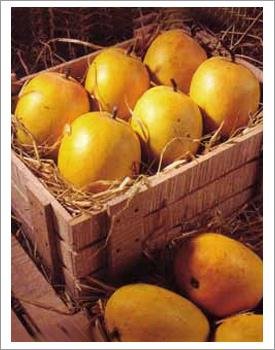
The most famous Indian mango is the Alphonso (or Alfonso), sometimes referred to as one of the most sought after fruits in the world. These mangoes are small, round, have a reddish-yellow glow, have a fairly round pit, and smell very sweet. They are available from around April until August. When ripe, the flesh is slightly fibrous though very soft, and the taste is simply sublime. The taste is almost overwhelmingly sweet with a slight tang and a softness that is difficult to describe. These must typically be purchased by the case (6 or 12 per case), with a per-mango price around $2.

Banganapali Mangoes
Another common Indian mango is the Banganapali. These are quite a bit larger than the alphonso and I often think they taste better. The flesh is creamy, the pit fairly flat, and the taste is a bit less intense, though extremely delicious. Because of their weight, these can be quite expensive ($5-6 per mango!) in North America. They're also fairly delicate, and bruise easily. A wonderful splurge, but hardly an everyday mango if you don't live near the source.

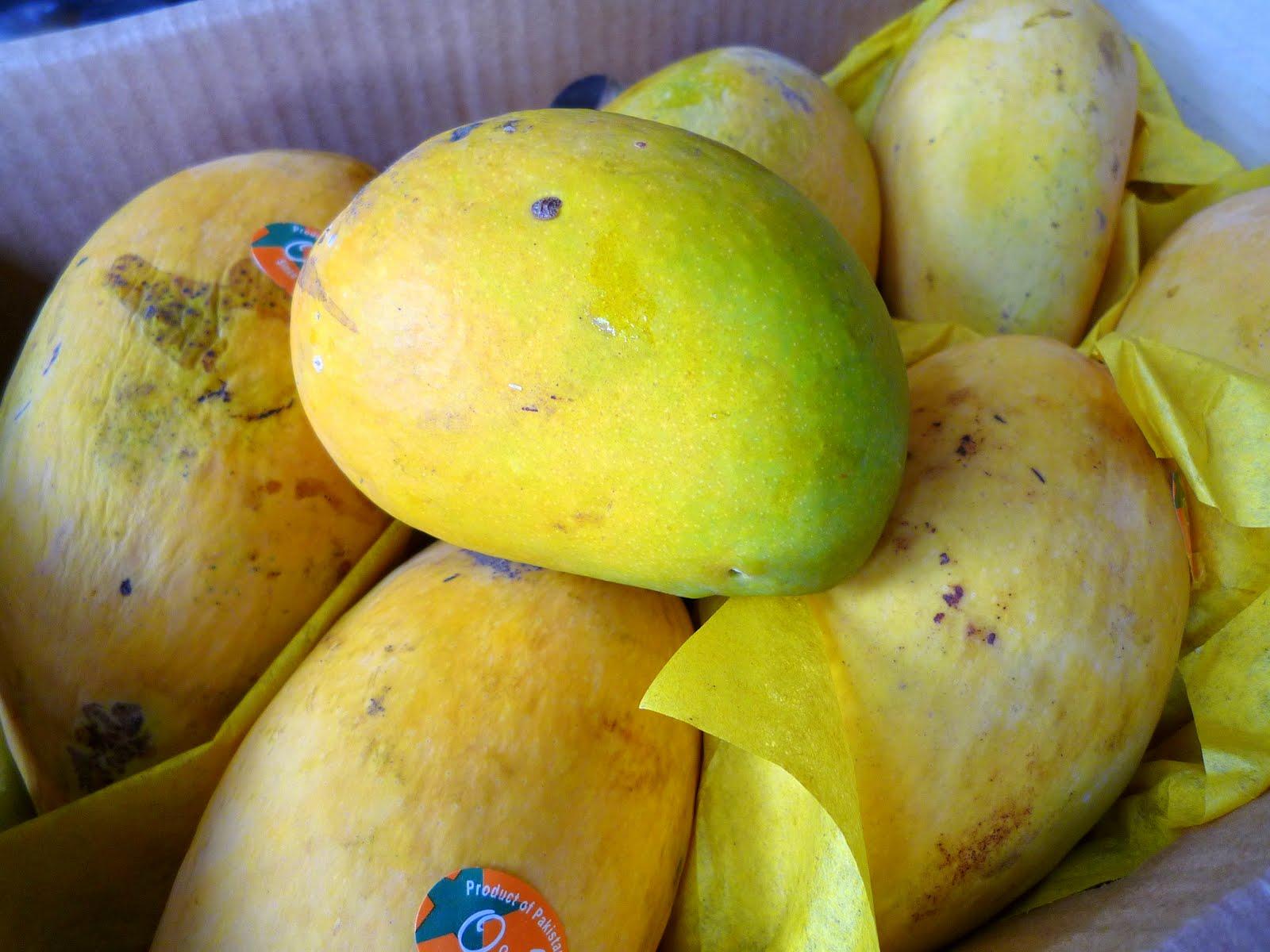
I know less about Pakistani mangoes, but do enjoy the Chaunsa or Honey mango. These are available from June (when I'm told they're best) until September. They also bruise extremely easily (which affects their taste) and are not always in wonderful shape when they arrive here. When they do arrive in good shape, though, they're delicious. Milder than the Alphonso or Banganapali, but with a bit more of a sophisticated taste than the Atulfo (hard to describe, but it's there).
Chaunsa Mangoes

There's also a mango that I don't know the name of that is from Haiti and shows up in Chinatown every January. The skin is green even when ripe, the shape is oblong, and the flesh is a bright, dark-ish orange. They are usually extremely fibrous, but nearly as sweet as the Atulfo. As an out-of-season mango, these are a good reminder of what is to come. I wouldn't want one in the summer, though.

There are also a wide range of Thai mangoes, one of which makes it to Toronto each year. This mango is dark green with a sweet, mild yellow flesh. These are extremely expensive -- usually $4-5 per fruit -- and, in my opinion, not worth it.

It also bears mentioning that unripe (green) mangoes are commonly used in Asian cooking and snacking, and widely available in good Asian or Indian markets. Unripe mangoes are crunchy and tart, but can be delicious as a salad (like a SE Asian papaya salad), as a snack with some chile salt and lime, or in an Indian curry. I often wish these were easier to come by in US supermarkets.

Happy mango eating!


Monday, January 30, 2012

Peppermint Patty Brownies

Happy New Year...about a month late!  How is it that I've gone a month without writing a blog post? I have no idea.  There's actually lots I could have told you about: a batch of sarsparilla soda, a cooking class in Guatemala, and little recipes here and there. I'll save all of that for later, however.

Today I'm going to tell you about making another concoction from Dorie Greenspan's fabulous book, Baking: From My Home to Yours. She calls them "Brrrrrownies," which is an apt name for brownies made with lots of peppermint patties (she uses commercially miniaturized 'patty bits'; I just chopped up some full-sized candy).

First, however, a bit of background. Peppermint patties have long been a favorite candy of mine. I discovered at Camp Michigania many years ago that they are delicious as frozen treats, and have enjoyed them ever since. (We'll skip the fact that I discovered this at about the same age my peers were, ahem, discovering what we'll just say were somewhat less sanctioned pursuits.) For a while I even kept a Costco-sized container of them in the freezer for periodic snacking. They're tasty!

With that background, I was pretty excited to see Dorie's recipe for these brownies. It's a dark, fudgy fairly typical brownie recipe, with a cup of chopped peppermint patties thrown in. The result, as you can see in the photo, is a brownie that is both rich and refreshing. And in which the cream (ok, creme) from the patties expanded almost like marshmallows. Chilling them in the fridge really brings out the peppermint, which is pretty delicious.

I'm thinking it'd be fun to get some peppermint oil and try to make my own peppermint cream next time. Or even mix peppermint oil with some sort of pastry cream infused with fresh mint. If my mother is reading this, she likely believes I'm about to suggest making them with basil or cilantro cream. I'm not, don't worry. But pepper or sea salt might be interesting...